

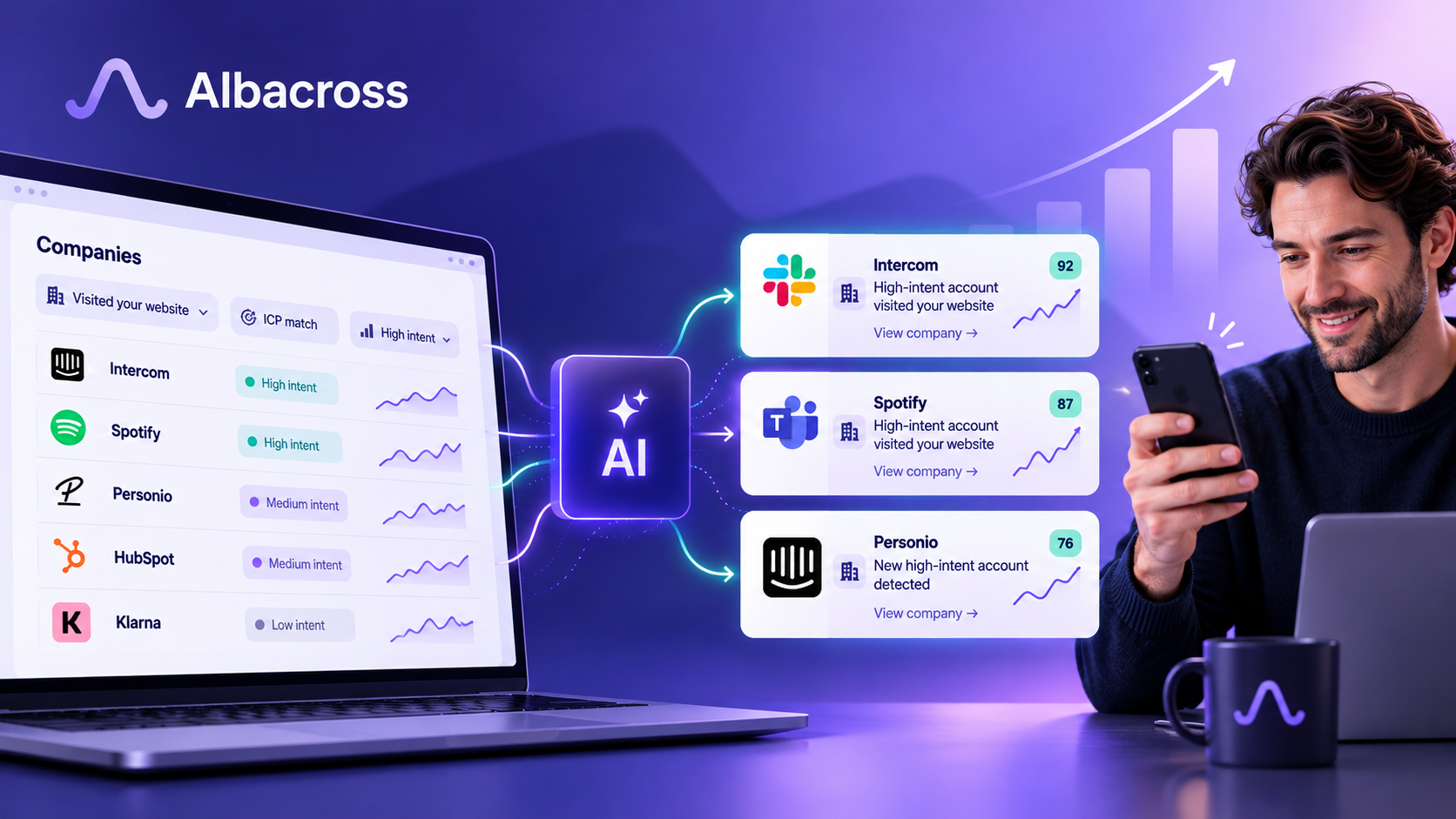
How AI Is Changing B2B Lead Generation in 2026
From smarter prospecting to automated outreach, discover how artificial intelligence is transforming the way B2B companies identify opportunities, engage prospects, and generate sales pipeline.
B2B Lead Generation Is Changing
Not long ago, generating B2B leads was largely a numbers game.
Sales teams built prospect lists, sent hundreds of cold emails, made countless calls, and hoped that a percentage of those contacts would eventually become customers.
Marketing teams focused on attracting website visitors, generating form submissions, and passing leads to sales.
While these methods still have their place, artificial intelligence (AI) is changing how businesses approach lead generation.
Today, the conversation is shifting from how many leads can we generate? to how can we identify the right opportunities and engage them at the right time?
And this shift is already happening.
According to McKinsey's State of AI report, published in November 2025, 62% of surveyed organizations were at least experimenting with AI agents. The research also found that marketing and sales were among the business functions reporting revenue benefits from AI adoption.
But what does this mean for B2B lead generation in practice?
Let's explore.
1. From More Leads to Better Leads
One of the biggest challenges in B2B lead generation has always been distinguishing genuine opportunities from contacts who are unlikely to become customers.
Having thousands of leads in your CRM might look impressive, but how many of those companies actually fit your ideal customer profile (ICP)?
And more importantly, how many are showing signs of interest?
AI can help businesses analyze company characteristics, historical sales data, engagement patterns, and other relevant signals to prioritize potential customers.
Instead of treating every lead equally, sales teams can focus on companies that are more likely to be relevant.
For example, imagine two companies visiting your website:
- Company A: A small business outside your target market that visits your homepage once.
- Company B: A company matching your ICP that repeatedly visits your pricing, integration, and product pages.
Which company should your sales team prioritize?
The answer might seem obvious, but without the right data and processes, sales teams can easily miss these opportunities.
AI-supported lead qualification can help make that prioritization more consistent and scalable.
The goal isn't necessarily to generate more leads. It's to identify better opportunities from the leads and signals you already have.
2. Understanding Buying Intent Before Prospects Contact You
B2B buyers often research potential solutions long before speaking with a salesperson.
They explore websites, compare providers, read product information, and evaluate different options.
During this process, they leave behind digital signals that can provide valuable insights into their interests.
This is where buyer intent data becomes particularly useful.
By combining website visitor identification with behavioral data, businesses can gain a clearer picture of which companies are engaging with their content.
For example, tools such as Albacross help businesses identify companies visiting their websites and understand their engagement.
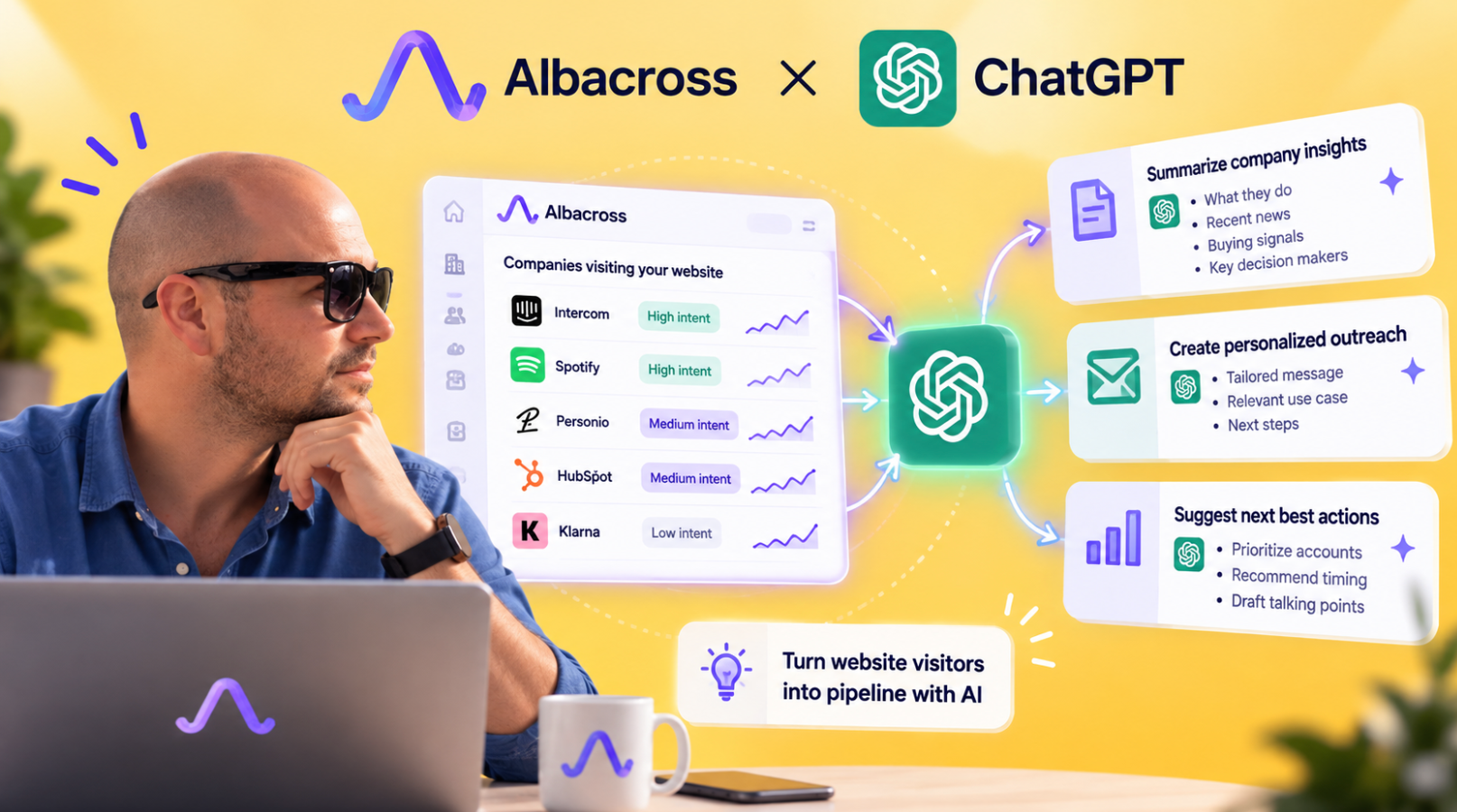
AI can then complement this information by analyzing patterns, supporting account prioritization, and helping sales teams decide on appropriate next steps.
Imagine receiving a notification that a company matching your ICP has returned to your website several times and explored a particular product.
Instead of making another completely cold call, your sales team has additional context for deciding whether and how to reach out.
Of course, website activity doesn't automatically mean someone is ready to buy. But combined with ICP fit and other signals, it can help businesses make more informed decisions.
3. AI-Powered Lead Scoring and Prioritization
Traditional lead scoring often relies on predefined rules.
For example, a company might receive points for operating in a particular industry, having a certain number of employees, or visiting specific website pages.
While this approach can work, it requires regular maintenance and doesn't always capture complex buying patterns.
AI-powered lead scoring can go further by analyzing historical conversion data and identifying relationships between different signals.
Depending on the available data and model, these signals might include:
- Company size, industry, and geographic location
- Website engagement and returning visits
- CRM history and previous interactions
- Marketing campaign engagement
- Similarities to existing successful customers
The result can be a more dynamic approach to lead prioritization.
Rather than asking salespeople to manually review every potential lead, AI can help surface accounts that deserve closer attention.
However, AI scoring is only as useful as the data behind it. Inaccurate information or poorly defined qualification criteria can still produce misleading recommendations.

That's why a clearly defined ICP remains essential, even in an AI-driven sales environment.
4. Personalization at Scale
Personalization has become an important part of successful B2B outreach.
But meaningful personalization takes time.
Sales representatives need to research companies, understand their business, identify relevant challenges, and create messages that resonate with potential buyers.
AI is making parts of this process significantly easier.
Generative AI tools can assist sales teams by summarizing company information, preparing account research, drafting emails, and suggesting relevant talking points.
For example, instead of sending a generic message introducing a product, a salesperson can use available account information to prepare outreach focused on the prospect's industry, business priorities, or potential needs.
The important distinction is that AI should support personalization, not replace genuine understanding of the customer.
A message that simply inserts someone's company name into an AI-generated template isn't necessarily personalized.
Relevant outreach still requires accurate information, context, and human judgment.
AI can help salespeople spend less time preparing messages and more time having meaningful conversations.
5. Automating Repetitive Sales Tasks
Lead generation involves much more than finding potential customers.
Sales and marketing teams also spend considerable time updating CRM records, enriching company information, assigning leads, preparing follow-ups, and coordinating activities.
Many of these repetitive tasks can be automated.
According to Salesforce's State of Sales report, AI agents are increasingly being adopted across the sales process, helping teams with activities ranging from planning to customer engagement.
For B2B lead generation, automation can connect different stages of the prospecting process.
Consider a workflow where:
- A company visits your website.
- A visitor identification platform recognizes the company.
- The company is evaluated against your ICP.
- Relevant engagement signals are analyzed.
- A qualified account is sent to your CRM.
- Your sales team receives a notification through Slack or Microsoft Teams.
AI can add another layer by helping summarize account activity, recommend priorities, or prepare relevant outreach.
Not every step requires artificial intelligence. In fact, combining reliable rule-based automation with AI-assisted decision-making is often a practical approach.
The benefit is straightforward: fewer manual tasks and more time available for activities that contribute to revenue.
6. Will AI Replace Sales Development Representatives?
With AI becoming increasingly capable of researching companies, generating emails, and automating workflows, an obvious question arises:
Will businesses still need sales development representatives?
AI will undoubtedly change how SDRs work, but replacing human interaction entirely is a different matter.
B2B sales often involves multiple stakeholders, complex requirements, long decision-making processes, and relationships built over time.
While AI can help identify opportunities and prepare outreach, successful sales conversations still depend on understanding customers, asking the right questions, negotiating, and building trust.
AI can also make mistakes.
Generated content may contain inaccurate information, misinterpret a prospect's needs, or create messages that sound convincing but lack substance.
For these reasons, human oversight remains important.
The more realistic opportunity is for AI to handle repetitive research and administrative work while salespeople focus on relationship-building and closing deals.
The future of B2B sales is likely to involve humans and AI working together rather than one replacing the other.
7. The Importance of Data Quality
There's another important consideration that often gets overlooked in discussions about AI: data quality.
AI systems depend on the information available to them.
If your CRM contains outdated contacts, duplicate accounts, incomplete company records, or inconsistent data, introducing AI won't automatically solve those problems.
In some cases, it may make them more visible.
Businesses looking to improve lead generation with AI should therefore start by reviewing their existing data and processes.
That means maintaining accurate CRM records, defining a clear ICP, connecting relevant data sources, and establishing reliable qualification criteria.
First-party data, including information about how companies interact with your website, can be particularly valuable when combined with existing CRM information.
Platforms such as Albacross can contribute to this process by providing company identification and website engagement insights.
Together with CRM data and appropriate AI tools, these signals can support more informed prospecting and prioritization.
At the same time, companies need to consider privacy, data protection, and responsible AI use when collecting and processing customer information.
8. The Future of AI in B2B Lead Generation
Looking ahead, one of the most interesting developments is the growing connection between AI, intent data, and automated sales workflows.
Traditionally, businesses have relied on separate tools for generating traffic, identifying leads, managing CRM records, and conducting outreach.
Increasingly, these activities can be connected.
Imagine a sales workflow where relevant companies are identified automatically, their engagement is analyzed, CRM records are updated, and sales representatives receive contextual information about potential opportunities.
Rather than spending hours reviewing lists and researching accounts, sales teams can focus on deciding which conversations are worth starting.
That doesn't mean every business needs a fully autonomous AI sales agent.
For many organizations, the greatest improvements may come from smaller changes: better lead qualification, faster notifications, more accurate data, and fewer repetitive tasks.
Ultimately, the value of AI should be measured not by how much technology a business adopts, but by whether it improves meaningful outcomes.
Are salespeople spending more time speaking with relevant prospects?
Are qualified opportunities reaching the right people faster?
Is the business generating more pipeline from its existing marketing investment?
Those are the questions that matter.
Conclusion: AI Won't Replace Your Sales Strategy. It Will Make It Smarter.
Artificial intelligence is changing B2B lead generation, but the fundamentals of successful sales remain the same.
Businesses still need to understand their ideal customers, identify relevant opportunities, and engage prospects with meaningful conversations.
What AI changes is how efficiently these activities can be carried out.
By combining AI-assisted analysis, reliable data, website visitor identification, and automated workflows, businesses can move away from simply chasing lead volume and focus on generating better opportunities.
And sometimes, those opportunities are already visiting your website.
The future of B2B lead generation isn't just about finding more prospects. It's about recognizing the right ones and knowing when to act.
References
- McKinsey & Company (2025) — The State of AI in 2025: Agents, Innovation, and Transformation. Research on AI adoption, organizational transformation, and business impact.
- Salesforce (2026) — State of Sales Report. Research into how sales organizations are adopting AI agents and changing their sales processes.

Oleksii Kosenko
CS an Ops

 Overview only the features needed for your use case
- Show how to adapt it to your customer qualification process


